
Field Guide No. 04
Reliable Backcountry Water Treatment
How I decide which method matches the water and the trip.
Most questions about backcountry water start with which filter to buy. That's the wrong place to start. There's no single best filter, only the right method for the water in front of you and the trip you're on, and clear water is no proof it's clean.
For You If
You carry one way to treat water and have never decided what your backup is
You're picking a method for a specific trip: clear water on your own, silty water, a group, or winter
You camp below freezing and need to know how to keep a filter from cracking
You want to know what each method actually removes safely, and what it leaves behind, viruses, chemicals, and heavy metals
Skip This If
You want a single "best filter" recommendation rather than a method matched to the water
You only take short solo overnights on clear water, where one simple method already covers you
You already run a two-method system and a post-trip drying routine you trust
You're after lab certifications and removal percentages rather than field method and judgment
Get the Water Treatment Field Guide
30 pages. About a 15-minute read.
What’s Inside

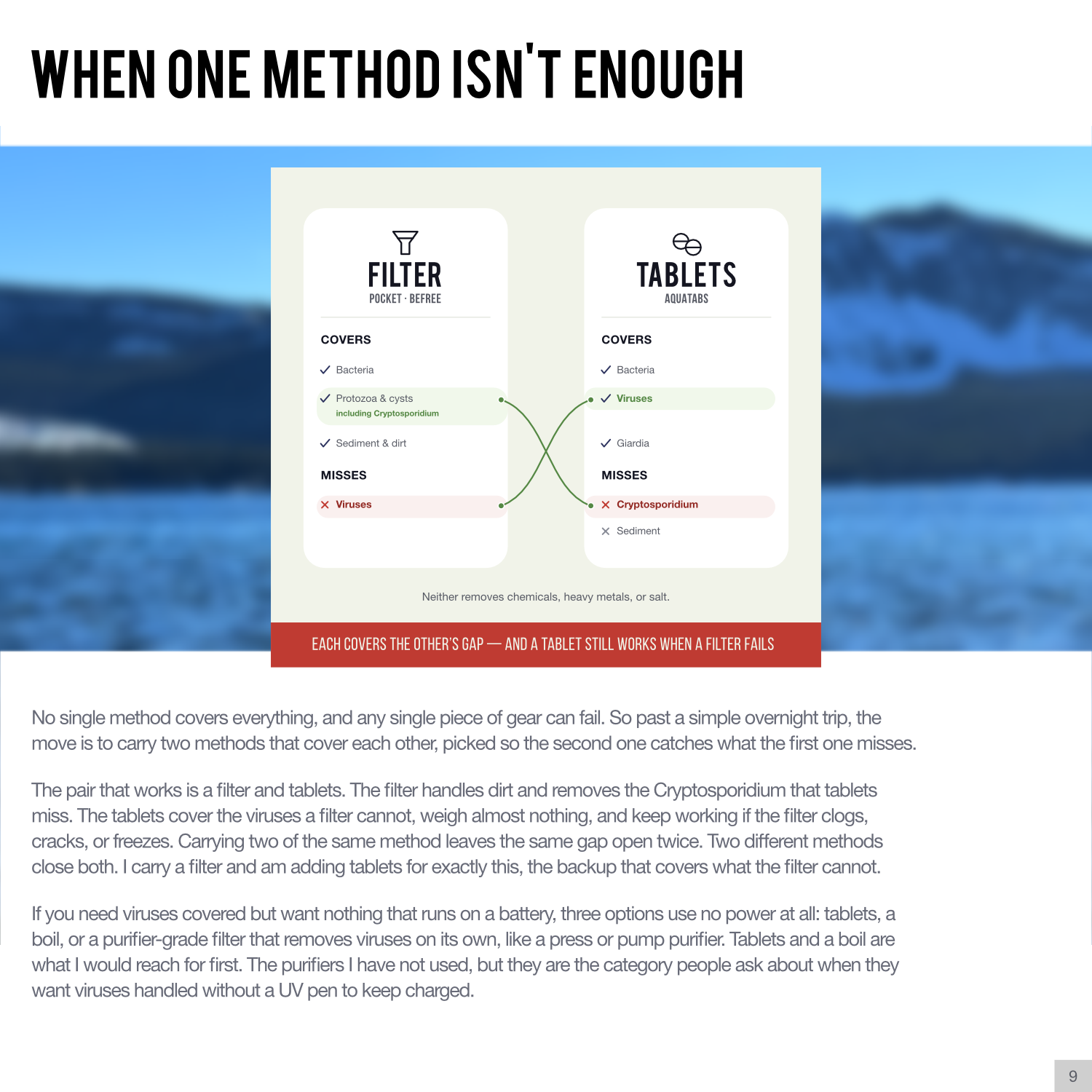
The table of what each method removes, and the gap that makes a filter-plus-tablets pair cover both Cryptosporidium and viruses
Why clear, cold water still gets treated, and how to read a source for risk instead of for how it looks
A full breakdown of the three pieces I carry, the Katadyn Pocket, the BeFree, and the Active Carbon Bottle Adapter, what each is for, and the cap system that keeps the clean and dirty sides from ever meeting
How to clean, dry, and store all three, because most filters die in storage, not in the field
The two ways a filter fails, why flow only warns you about one, and how to catch the silent one with the Pocket gauge, the BeFree bubble test, and an honest check after any freeze




© 2026 Adventures Andreams, All rights reserved.